TPO roofing is a popular choice for flat roofs because it offers durability, energy efficiency, and a clean, practical design. Flat and low-slope roofs need materials that can handle rain, sun, heat, and changing weather. TPO membranes are designed for these conditions. For many commercial buildings and some homes, this system offers a useful balance of performance and cost.
What Is TPO Roofing?
TPO stands for thermoplastic polyolefin. It is a single-ply roofing membrane made for flat and low-slope roofs. The material comes in large sheets that are rolled across the roof and secured to the roof deck.
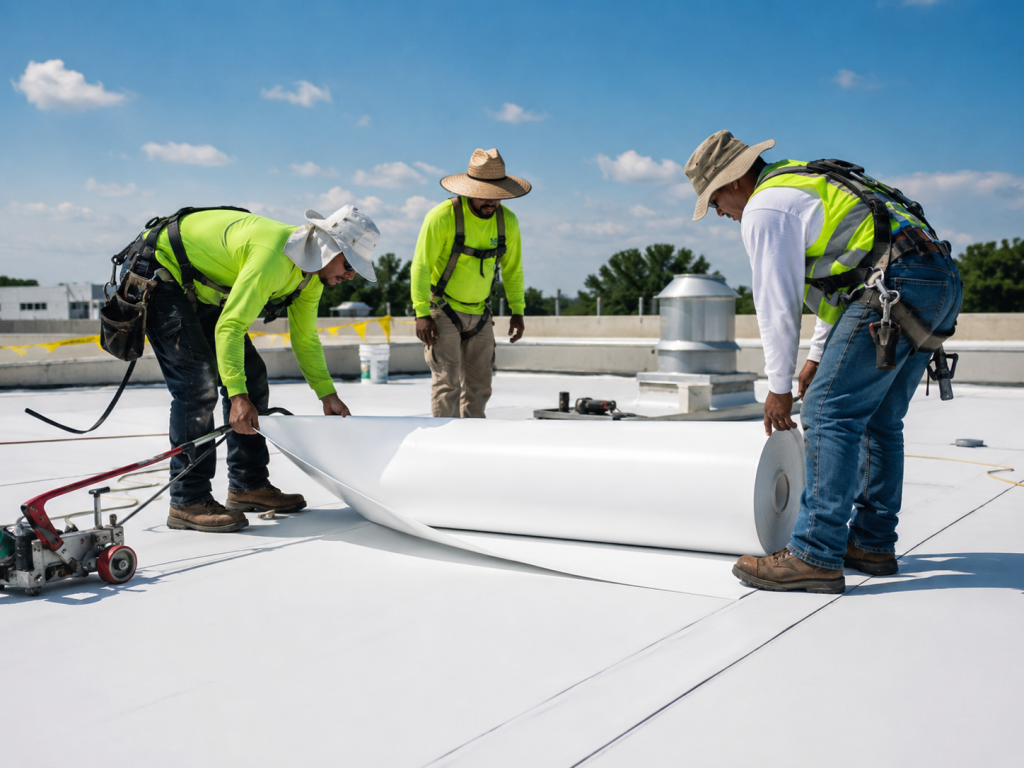
The seams are heat-welded to create a strong bond that helps limit water entry. TPO is usually white, though other colors may be available. Its bright surface reflects sunlight and can help reduce heat buildup.
Why TPO Roofing Works Well on Flat Roofs
Flat roofs do not shed water as quickly as steep roofs. Their roofing material must create a smooth, reliable barrier over a broad surface.
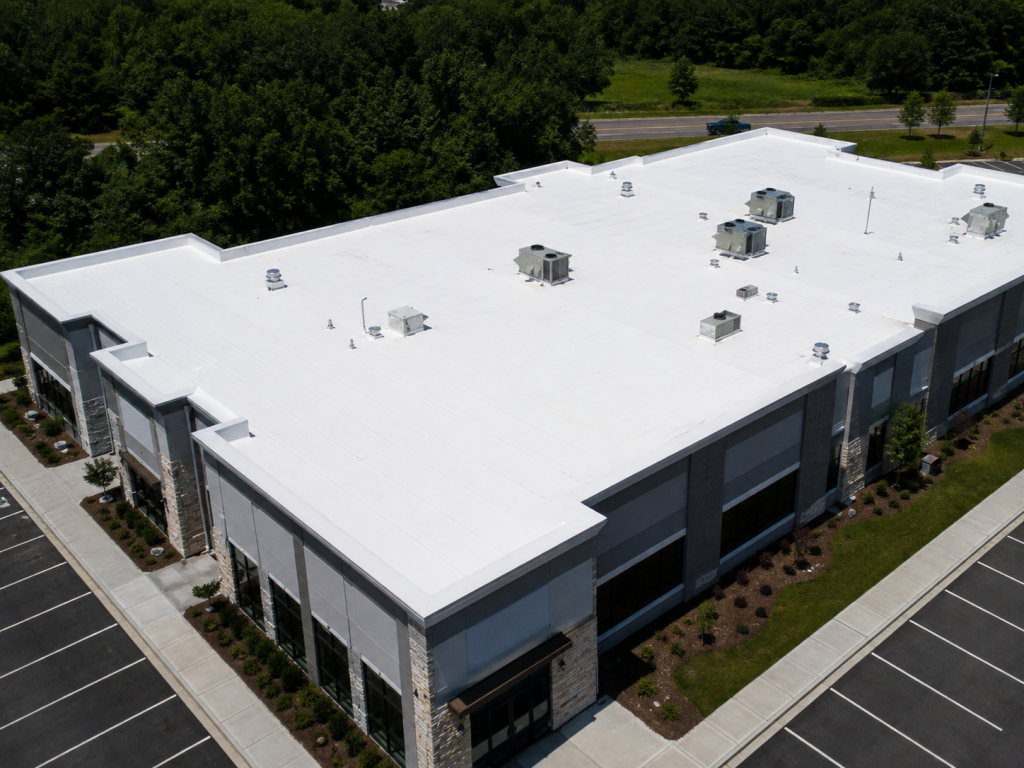
TPO roofing can cover large areas with fewer seams than many other materials. Once the seams are welded, the membrane forms a continuous protective layer.
Key benefits include:
- Lightweight material
- Flexible sheets for vents and roof details
- Strong welded seams
- A smooth surface that is easy to inspect
- Resistance to UV exposure and weather
Proper installation still matters. Drains, flashing, roof edges, seams, and penetrations must be sealed correctly to help prevent leaks.
TPO Roofing Can Help Reflect Heat
One reason property owners consider TPO is its reflective surface. White TPO membranes can reflect sunlight instead of absorbing as much heat into the building.
A cooler roof may also reduce some heat transfer into the space below.
Energy results vary based on insulation, building design, roof condition, and climate. Still, a reflective membrane can support a more energy-conscious roofing system.
TPO Roofing Offers Weather Protection
A flat roof needs dependable protection against rain, heat, and wind. TPO membranes are made to resist UV exposure and stay flexible through changing temperatures.
Installers use hot-air equipment to join membrane sections, creating strong welded seams.
TPO can also resist some punctures and tears. However, sharp debris, loose equipment, and heavy foot traffic can still cause damage. Routine inspections can help find small problems before water reaches the building. If damage is found, professional roof repair services should be completed before the issue spreads.
TPO Roofing Is Practical to Maintain
Flat roofs should be checked regularly, and TPO makes visual inspections fairly simple. Its smooth surface allows roofers to look for punctures, loose flashing, seam problems, and drainage concerns.
Maintenance may include:
- Clearing leaves and debris
- Keeping drains and scuppers open
- Checking seams and roof edges
- Inspecting areas around vents and equipment
- Looking for cuts or loose sections
Standing water may point to a drainage issue that needs attention.
How Long Can TPO Roofing Last?
The life of a TPO roof depends on the membrane, installation quality, weather, maintenance, drainage, and roof traffic. Regular inspections help find small seam problems or punctures that are hard to see from the ground.
If a TPO roof has widespread damage, poor drainage, or repeated leaks, an inspection can help determine if repair or roof replacement is the better choice.
Is TPO Roofing Right for Every Flat Roof?
TPO is a strong option, but it is not right for every property. Roof structure, slope, insulation, drainage, building use, and existing materials should all be reviewed first.
A roofing contractor can inspect the roof and explain which system fits the building. This allows property owners to compare TPO with other flat roofing options based on long-term needs.
TPO Roofing FAQ
Is TPO roofing only for commercial buildings?
No. It is common on commercial properties, but it may also be used on homes with flat or low-slope sections.
Can TPO roofing be repaired?
Yes. Small punctures, damaged seams, and some localized problems can often be repaired when found early.
Does TPO roofing need maintenance?
Yes. Routine inspections, drain cleaning, and prompt repairs can help reduce the risk of larger leaks.
Why is TPO often white?
White TPO reflects sunlight and helps limit heat absorption. Other colors may also be available.
A Practical Choice for Flat Roof Protection
TPO roofing remains popular because it combines a lightweight membrane, welded seams, reflective properties, and simple maintenance. These features make it well suited to many flat and low-slope roofs.
Strong results depend on good drainage, proper installation, regular inspections, and timely repairs. Property owners considering a new flat roof should have the existing system inspected before choosing a material.
Schedule a Flat Roof Evaluation
Not sure whether TPO is the right fit for your property? Align Roofing Company LLC can help you understand your flat roofing options and choose a solution that fits your building’s needs.
Contact us to get professional guidance for your flat roof. You can also visit our blog page for more roofing tips, maintenance advice, and helpful information.